
East Coast Museum of Technology, Gisborne
Location: 67 Main Road, Makaraka, Gisborne 4010
Phone: 06 927 7080
Website: https://ecmot.org.nz
Hours: Saturdays, 9:00am - 4:00pm
Entry: Adults: $10, Student/Gold Card: $5, School Children: $2, Under 5: Free
Some museums display a carefully selected collection of objects beneath flattering lights, accompanied by plaques explaining why each item is important.
The East Coast Museum of Technology takes a slightly different approach.
Its philosophy appears to be: keep absolutely everything, place it inside a shed, and let visitors discover it before somebody asks awkward questions about storage space.
The result is one of Gisborne’s most fascinating, eccentric and genuinely enjoyable attractions.
Located in Makaraka, around six kilometres from central Gisborne, the museum occupies the former Kia Ora Dairy Factory site at the end of a long driveway.
Its transport and technology collection began as part of Gisborne’s main museum before moving to Makaraka in 1975, becoming an independent incorporated society in 1984 and purchasing its current premises in 1988.
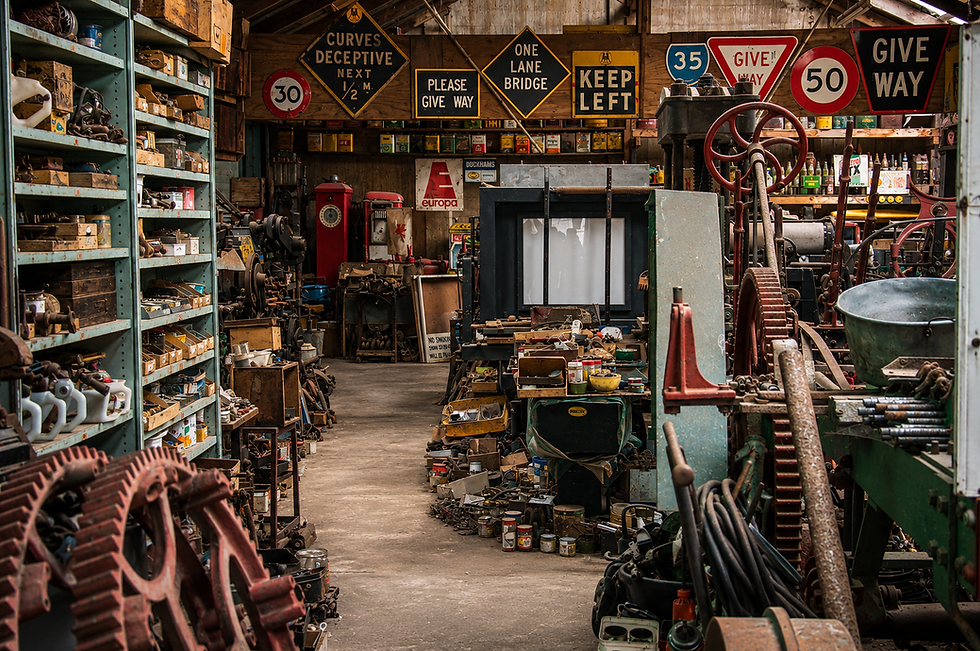
Today, it feels less like entering a conventional museum and more like being granted access to the world’s most interesting grandfather’s sheds.
Several grandfathers, perhaps.
Possibly an entire committee of them.
A Museum With Serious Commitment Issues
The collection cannot commit to just one subject.
There are vintage cars, trucks, fire engines, motorcycles, agricultural machines, tools, radios, telephones, computers, sewing machines, kitchen appliances and enough mysterious mechanical equipment to make you nod thoughtfully while having absolutely no idea what any of it does.
One moment you are inspecting an old washing machine that once represented the height of domestic luxury.
The next, you are standing beside a fire engine, looking at a collection of road signs or wondering whether a large iron contraption was designed to harvest grain, repair tractors or launch an early Gisborne resident into orbit.
This is part of the fun.
The East Coast Museum of Technology is not polished into submission. It is crowded, atmospheric and wonderfully unpredictable.
The museum itself describes the experience as “perfectly imperfect”, which may be the most accurate museum slogan in New Zealand.
Every shelf seems to contain something that once mattered enormously to someone.
Old oil tins sit beside hand tools. Wooden drawers hold unidentified metal pieces.
Early computers remind anyone over 40 that they once waited several minutes for a machine to do something a phone now achieves before breakfast.
Meanwhile, children can discover the shocking truth that household appliances were not always white, silent and connected to Wi-Fi.
Nostalgia Without the Velvet Ropes
For older visitors, the museum can trigger an alarming number of memories.
You may recognise a telephone from your childhood, a kitchen appliance from your grandmother’s house or a piece of farm machinery that an elderly relative once operated without safety goggles, hearing protection or any apparent concern for personal survival.
For younger visitors, it offers a glimpse into a mysterious period when televisions had knobs, cars had ashtrays and computers occupied an entire desk while performing approximately three tasks.
Many of the objects are displayed in themed sheds, creating an experience that feels exploratory rather than overly managed.
Visitors frequently comment on the sheer size and variety of the collection, with families often spending several hours wandering between vehicles, machinery and domestic technology.
It is the sort of place where adults begin by saying, “We’ll just have a quick look,” then emerge two hours later discussing carburettors with unexpected confidence.
Run by People Who Actually Care
The museum is operated by volunteers as a not-for-profit organisation.
That matters because this enormous collection does not preserve, organise and occasionally roar back into life by itself.
The volunteers bring knowledge, enthusiasm and the reassuring ability to identify machinery that most visitors would otherwise describe as “that large green thing with the wheel”.
Their work keeps an extraordinary slice of Gisborne’s industrial, agricultural, transport and domestic history from disappearing into scrapyards, landfill or the back corner of somebody’s paddock.
The museum does not pretend that every object is pristine.
Some are beautifully restored.
Others still carry their working scars, faded paint and well-earned rust.
Together, they show how people travelled, worked, communicated, cooked, repaired things and generally survived before instruction manuals became 94-page downloadable PDFs.
Why You Should Visit
The East Coast Museum of Technology is ideal for families, history enthusiasts, machinery lovers, curious children and anyone who has ever said, “They don’t make things like they used to.”
They certainly do not.
Modern manufacturers would struggle to sell a washing machine requiring two adults, a spanner and a basic understanding of steam engineering.
More importantly, the museum offers something increasingly rare.
It allows visitors to explore history through the ordinary objects people actually used.
Not royal jewellery.
Not priceless paintings.
Telephones, tractors, cookers, engines, tools and vehicles.
The things that built homes, ran farms, fought fires, repaired roads and occasionally removed a fingertip because workplace health and safety had not yet discovered clipboards.
It is messy in the best possible way, deeply nostalgic and unmistakably Gisborne.
Plan Your Visit
The museum operates on selected opening days rather than conventional daily hours.
Its official website currently lists specific Saturday openings, while group and school visits may be arranged by appointment.
Visitors should check the museum’s website or contact the team before travelling.
Allow at least a couple of hours.
Wear comfortable shoes.
Bring curious children, mechanically minded relatives or anyone who believes throwing away a potentially useful metal object is an act of moral failure.
And prepare to discover that Gisborne has been quietly storing almost everything it has ever invented, driven, repaired, cooked with or accidentally left in a shed.
Why Gisborne’s Three Museums Are Worth Adding to Your Trip
Gisborne has three separate and distinct museums that reveal the practical, inventive and deeply local history that helped the district stay connected and self-reliant through aviation, farming, transport, machinery, art and everyday life.
Visiting the East Coast Museum of Technology, along with:
and
adds real depth to a Gisborne itinerary, with each offering a different experience and a strong sense of place.
Gisborne's three unexpectedly rewarding museum experiences are for travellers who enjoy discovering the stories, objects and personalities that shaped a city.


