
Want to Live in Gisborne? A Guide Before Moving
Updated: 7 days ago

So, You’re Thinking About Living in Gisborne?
At some point, almost everyone who visits Gisborne has the same dangerous thought.
“What if we just lived here?”
It usually happens around sunset, after a swim, with fish and chips nearby, when the rest of New Zealand appears to be either stuck in traffic, arguing about house prices, or wearing three layers of merino in what they insist is “summer”.
Gisborne does that to people.
It sits on the eastern edge of the North Island, sunny, coastal, slightly remote, relaxed, occasionally chaotic, and deeply convinced that life does not need to be quite as complicated as Auckland, Wellington, or anywhere with a motorway.
But living in Gisborne is not the same as having a long weekend here. A holiday lets you admire the beaches. Living here means learning which supermarket car park everyone has strong opinions about, why nobody is surprised when someone turns up in gumboots, and how “five minutes away” can be both accurate and a complete local philosophy.
This guide is for singles, couples, families, retirees, remote workers, returning Kiwis and overseas migrants wondering whether Gisborne is a realistic place to live, not just a beautiful place to visit.
The answer is: yes, for the right person.
But Gisborne rewards people who understand what they are choosing.
The Big Picture
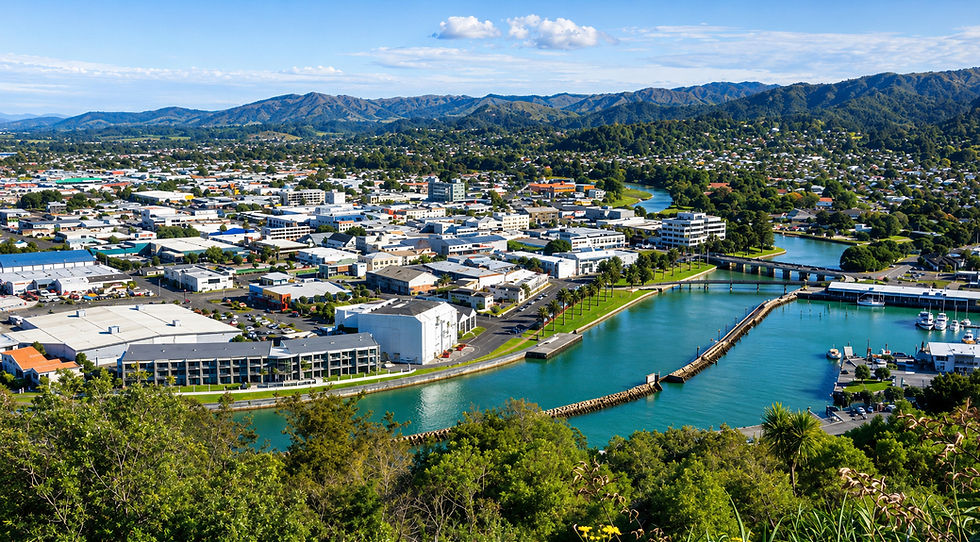
Gisborne is a small coastal city with a district population of about 52,700.
It has the essentials of urban life, including a hospital, schools, airport, supermarkets, trades, cafés, restaurants, sports clubs, beaches, parks and a working local economy.
What it does not have is the scale of a major city.
That is either the best thing about it or the deal-breaker.
If you want six shopping malls, an endless dating pool, three international concerts a week and the ability to anonymously reinvent yourself every Thursday, Gisborne may feel small.
If you want sunshine, beaches, space, shorter commutes, a slower pace, and the feeling that your day does not need to be swallowed alive by traffic, Gisborne starts to look very attractive.
The Lifestyle: Gisborne’s Main Selling Point
The Gisborne lifestyle is not subtle.
You can finish work and be at the beach in minutes.
You can drop children at school without performing a military-level traffic operation.
You can get across town quickly.
You can know your butcher, your mechanic, your barista and, whether you like it or not, half the people in the supermarket.
Life feels closer to the surface here.
The beach is not an occasional outing. It is part of the rhythm.
Walking, surfing, fishing, swimming, cycling and doing absolutely nothing near water are all legitimate local pursuits.
There is a strong outdoor culture, but not in a polished, expensive, matching-activewear way.
Gisborne outdoor life is more practical.
People go fishing because they actually fish. They surf because the surf is there. They wear Red Bands because Red Bands are useful, not because a lifestyle magazine said “rural coastal authenticity” was trending.

Climate: Sunshine With a Few Plot Twists
Gisborne’s climate is one of its great advantages. It is known for high sunshine hours, mild winters, warm summers and a generally outdoor-friendly way of life.
NIWA describes the Gisborne climate as generally pleasant, with a large number of sunshine hours and relatively low mean wind speed. That matters if you are comparing Gisborne with Wellington, where umbrellas are more of a comedy prop than a weather solution.
Summers are warm and beach-friendly.
Winters are milder than many inland or southern parts of New Zealand.
Spring can be dry. Rainfall is uneven, with a stronger winter pattern, and the region can experience weather extremes because of its eastern position.
In plain English: most of the time, the weather is one of the reasons people move here.
Occasionally, the weather reminds everyone that nature still has the keys.
Housing: Better Than Auckland, Not Exactly 1998
Gisborne housing used to be spoken about as “cheap”. That word now needs to be handled carefully, preferably with gloves.
Compared with Auckland, Tauranga, Queenstown or parts of Wellington, Gisborne can still look more affordable. But it is not bargain-bin New Zealand.
Recent market data shows Gisborne city’s median sale price around the low-to-mid $600,000s, with median rent close to $590 per week.
That means Gisborne may offer better value than larger coastal centres, but it is not a magical escape from the national housing problem.
For buyers, the appeal is often lifestyle per dollar. You may get a family home, outdoor space, shorter commute and beach access without needing to sell a kidney, a boat and your last remaining optimism.
For renters, the market can be tight. Good rentals move quickly. Families, new workers and migrants should plan ahead rather than assuming they can arrive on Friday and casually pick from twelve charming villas by Sunday.

Jobs and Work
Gisborne’s economy has a strong local base in agriculture, forestry, fishing, horticulture, viticulture, healthcare, education, trades, construction, retail, hospitality, local government and tourism.
This is not a city where every career path has endless openings. Some specialised professionals may find fewer choices than in Auckland, Wellington or Christchurch. But in core local sectors, there is steady demand.
Healthcare is a major employer. Education matters. Trades are important. Hospitality and tourism provide opportunities, especially for people who are flexible, practical and not offended by the idea of doing three jobs before morning tea.
Remote workers are another group who should pay attention.
Gisborne can be very attractive if your income is not tied to the local job market. If you can work online, consult, freelance or run a business remotely, Gisborne lets you earn from elsewhere while living somewhere that does not require a daily emotional support lane-change.
Healthcare: Good Local Services, But Know the Limits
Gisborne has a public hospital offering emergency care, inpatient care, maternity services, surgery, outpatient clinics, mental health services and community health services.
That is reassuring.
However, Gisborne is still a regional centre. For some specialist appointments, procedures or complex care, residents may need to travel to larger centres.
This is common in regional New Zealand, but it matters more if you have ongoing health needs, are retiring, or have children requiring specialist services.
The honest summary: everyday healthcare is available locally, but people with complex medical requirements should check access before moving.
This is not a reason to rule Gisborne out. It is a reason to do grown-up homework before buying the house with the lemon tree and the sea breeze.
Schools and Raising Children
For families, Gisborne has a lot going for it.
The city offers primary, intermediate and secondary schooling options, along with sports clubs, arts, music, surf lifesaving, swimming, parks and beaches.
The biggest advantage is lifestyle.
Children can grow up close to the beach, with shorter travel times and more outdoor freedom than many larger cities. Weekend plans do not need to involve a $200 family activity and a parking building. Sometimes the plan is “go outside”, which remains one of New Zealand’s most underrated parenting strategies.
The smaller community can also be a strength.
Teachers, coaches and families often know each other. Children are more likely to be recognised, supported and remembered.
The flip side is that smaller places can feel socially close.
Teenagers may feel the limits of a smaller city as they get older. Many eventually leave for university, work or travel. That is not failure. That is how Gisborne exports young adults before quietly luring some of them back ten years later with sunshine and property envy.
Singles: Beautiful Place, Smaller Dating Pool
For singles, Gisborne can be brilliant or challenging, depending on personality.
If you are outdoorsy, social, sporty, creative, practical, community-minded or happy to build a life through clubs, work, friends and local networks, Gisborne can be rewarding.
If your ideal social life depends on endless new people, large nightlife scenes and dating apps that look like a population census, Gisborne may feel small.
The dating pool exists. It is just not Auckland Harbour. It is more like a local swimming hole where everyone knows who jumped in last summer.
Singles who thrive here tend to be those who enjoy lifestyle first and social scale second.

Couples: Possibly Gisborne’s Sweet Spot
Couples often suit Gisborne well.
The city offers a strong work-life balance, access to beaches, cafés, wineries, weekend drives, fishing, walking and a slower pace. If one or both partners can work remotely, Gisborne becomes especially appealing.
It is also a good place for couples who are tired of spending their lives commuting, renting tiny apartments, or paying city prices for the privilege of hearing their neighbour sneeze through a wall.
The question for couples is usually employment. If both people can find suitable work, or one has portable income, Gisborne can be a very good lifestyle move.
Families: One of the Strongest Arguments for Moving
Families are often drawn to Gisborne for space, climate and simplicity.
The commute is shorter.
The beach is closer.
Sport is accessible.
The weekend does not need to be planned with spreadsheet precision. There is a strong sense of local community.
Parents often like the idea of children growing up somewhere grounded, outdoorsy and less frantic than a large city.
But families should consider three practical issues before moving:
First, secure housing early.
Second, research schools and childcare.
Third, make sure at least one reliable income stream is in place.
Gisborne is relaxed. The mortgage provider is not.
Overseas Migrants: A Softer Landing, With Some Adjustments
For overseas migrants, Gisborne can offer a warm, friendly, manageable introduction to New Zealand life.
It is smaller, slower and less intimidating than Auckland.
People may greet you. Strangers may talk to you. A five-minute errand can become a fifteen-minute conversation about weather, fishing, roadworks, someone’s cousin and the price of tomatoes.
For migrants from large cities, Gisborne may feel peaceful.
It may also feel quiet.
The range of shops, cultural services, restaurants and specialist communities is smaller than in major centres.
The best fit is usually migrants who want coastal living, community, family life, outdoor space and a calmer pace, rather than big-city variety.

Transport: Easy Around Town, Remote Beyond It
Getting around Gisborne city is easy.
Driving across town is usually quick. Traffic exists, but locals may describe a three-minute delay with the emotional gravity of a national crisis.
There are local bus services, including urban routes and school buses, but Gisborne is still largely car-oriented. For many households, having a vehicle makes life easier.
The airport is important.
Air New Zealand operates daily non-stop flights connecting Gisborne with Auckland and Wellington. That makes business trips, family visits and onward travel realistic.
Road access is more complicated.
Gisborne’s location is part of its charm, but also part of its challenge. It is geographically isolated compared with many New Zealand centres.
Road trips to larger cities take time, and weather events have shown how vulnerable regional routes can be.
The honest version: Gisborne is connected, but not effortlessly connected.
Shopping, Services and Daily Convenience
Gisborne has the basics: supermarkets, pharmacies, hardware stores, cafés, restaurants, gyms, mechanics, trades, schools, medical services and professional services.
But it does not have everything.
Specialist shopping may require online ordering or a trip to a larger centre.
Big events often happen elsewhere. Some services have fewer providers, which can mean waiting.
On the other hand, the daily convenience is excellent.
You can often get from home to school, work, the supermarket, the beach and back again without feeling that your life has become a transport logistics business.
Food, Wine and Cafés
Gisborne has a stronger food and wine scene than many newcomers expect.
There are vineyards, local produce, cafés, restaurants, markets and relaxed places to eat. It is not trying to be Auckland. It does not need to. Gisborne food culture is more casual, local and sun-soaked.
The region’s wine history is a genuine asset, especially for people who enjoy cellar doors, long lunches and pretending that “supporting local” requires another glass.

Community: Friendly, But Not Anonymous
Gisborne is friendly, but it is also small enough that reputation travels.
This can be wonderful. People help each other. Local networks matter. Newcomers can build genuine connections.
It can also be confronting if you are used to city anonymity. In Gisborne, someone may know your landlord, your boss, your cousin, your mechanic and the person who saw you reverse badly at Pak’nSave.
The best approach is simple: be decent, be patient, join things, support local businesses, and do not assume small means unsophisticated.
Gisborne may be relaxed, but it notices.
The Challenges
A proper guide has to say the quiet part out loud.
Gisborne is not perfect.
The job market is smaller.
Rental housing can be tight.
Some specialist healthcare requires travel.
Shopping options are more limited. Roads can be vulnerable.
Flights are useful but not cheap-city frequent.
Young adults may eventually want bigger study and career options.
The city can feel small if you need constant novelty.
And yes, the pace can be relaxed enough to test people who arrive with a clipboard, a five-year plan and no tolerance for “we’ll get to it”.
But many residents see these drawbacks as part of the trade.
You get sunshine, beaches, community, space and a calmer daily rhythm. In return, you accept that not every convenience of a major city comes with you.
Gisborne Compared With Other NZ Locations
Compared with Auckland, Gisborne is smaller, sunnier, less congested and generally more relaxed. Auckland wins on jobs, shopping, international connections and scale. Gisborne wins on beach access, commute times and lifestyle simplicity.
Compared with Wellington, Gisborne has better weather, easier driving and more coastal warmth. Wellington has more government jobs, culture, nightlife and career variety.
Compared with Tauranga, Gisborne offers a similar coastal appeal without the same level of growth pressure, traffic and house-price intensity. Tauranga is larger and more connected. Gisborne is more relaxed and less crowded.
Compared with Napier, Gisborne feels more remote and informal. Napier has stronger links to Hawke’s Bay and a more polished visitor economy. Gisborne has a looser, surfier, more laid-back feel.
Compared with Christchurch, Gisborne is much smaller and less urban. Christchurch has more jobs, services and housing scale. Gisborne has a warmer coastal rhythm and less big-city sprawl.

Who Should Move to Gisborne?
Gisborne is a strong fit for:
Remote workers
Healthcare and education professionals
Tradespeople
Hospitality and tourism workers
Families wanting an outdoor childhood
Couples wanting lifestyle and space
Retirees who value climate and community
Migrants wanting a smaller coastal city
People who surf, fish, walk, garden, cycle or like seeing the sky
It may be less ideal for:
People needing very specialised careers
People who need major-city nightlife
People with complex specialist healthcare needs
People who rely heavily on public transport
People who dislike small-community visibility
People who think “remote” is charming only in real estate ads
The Verdict
So, what is it really like living in Gisborne?
It is sunny, coastal, relaxed, practical, occasionally frustrating, often beautiful and very much its own place.
It is not a mini Auckland. It is not a cheaper Tauranga. It is not Wellington with better weather.
It is Gisborne.
Life here can feel easier in ways that matter: shorter drives, warmer days, more beach time, less rush, more space to breathe.
But it also asks something of you.
You need to accept distance.
You need to plan around a smaller job market.
You need to understand that some services are regional, not metropolitan.
You need to be comfortable in a place where community matters and anonymity is not really the local sport.
For the right person, Gisborne is not just a place to live.
It is a lifestyle reset with better weather, better beaches and a much higher chance of seeing someone in pyjamas at the supermarket acting as if this is a perfectly normal civic tradition.
Which, to be fair, in Gisborne, it is.


