
Gisborne’s Main Street Mystery Ghost Buildings
Updated: Aug 2
Most visitors walking down Gladstone Road see three unoccupied old buildings.
Locals see three unanswered questions.
For more than a decade, Gisborne’s most prominent buildings have sat at the centre of one of New Zealand’s most unusual property sagas, a story involving a royal visit, a methamphetamine conviction, Singapore businessmen, international investigations, High Court proceedings and millions of dollars worth of commercial property.
It is a story so strange that if it happened in a television drama, viewers would probably complain it was unrealistic.
Yet it all happened right here in Gisborne.
The Investigation Nobody Saw Coming
The story did not begin with property.
It began with methamphetamine.
Singapore national Thomas Cheng was convicted in New Zealand for importing and supplying methamphetamine and was later sentenced to more than ten years in prison.
Ordinarily, that would have been the end of the story.
Instead, it became the beginning.
According to court and media reports, Cheng made claims about the extent of his property holdings while speaking with an undercover police officer.
Investigators became interested.
What followed was an extensive examination of companies, assets, unpaid tax, bank accounts and commercial properties linked to Cheng and associates William Cheng and Nyioh Chew Hong.
Eventually, Police obtained restraining orders over multiple commercial properties throughout New Zealand connected to the wider investigation.
It was reported that six of those properties were located in Gisborne.
Which is where the story starts feeling less like a court file and more like something a Gisborne local would tell you over a coffee, beginning with the words, “You won’t believe this, but…”
Because among the restrained Gisborne assets were three of the most visible buildings on Gisborne's main street.
Not obscure warehouses. Not forgotten sheds down a back road.
Prime Gladstone Road real estate that thousands of people walked past every week without realising they were looking at buildings caught in an international legal saga.
For many locals, part of the fascination is that the buildings remain seized, vacant and seemingly stuck in time, unable to move forward while the years pass around them.
The Masonic Hotel, 46 Gladstone Road, Gisborne 4010

The Masonic Hotel has watched Gisborne grow for more than a century.
It is one of the city’s most recognisable landmarks and arguably one of its most beautiful.
The building has witnessed economic booms, depressions, earthquakes, celebrations and generations of local history.
Then, in 1954, it welcomed perhaps its most famous visitors.
Queen Elizabeth II and Prince Philip visited Gisborne during the 1954 New Zealand Royal Tour and took lunch at the Masonic Hotel.
For a few hours, one of the most important people on Earth sat inside what was already one of Gisborne’s most prestigious buildings.
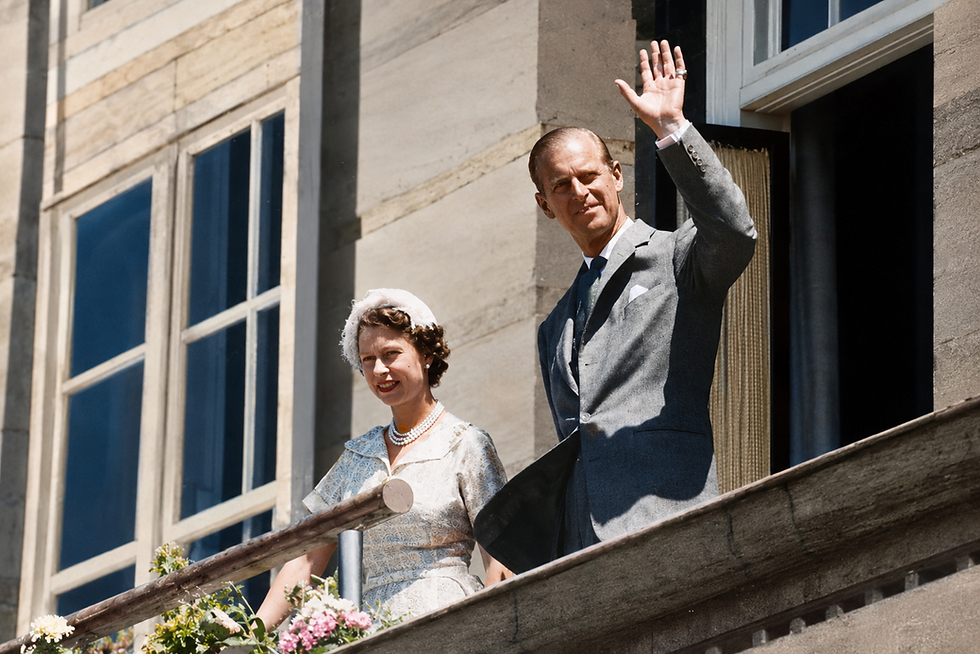
It is difficult to imagine a more respectable chapter in a building’s history.
Which makes the next chapter all the more remarkable.
Decades later, the Masonic became one of the buildings caught up in the international property investigation.
Today it remains both a heritage icon and a symbol of unrealised potential.
Ask a local what should happen to it and you’ll likely start a conversation that lasts twenty minutes.
The T. & G. Building, 190 Gladstone Road, Gisborne 4010
The T. & G. Building represents a different era of Gisborne.
Built in 1961 during a period of growth and modernisation, the four-storey building replaced older commercial structures and brought sleek modern architecture to the heart of the CBD.
Even today, its distinctive profile remains one of the defining features of Gladstone Road.
Many visitors walk past without noticing it, but most locals know it instantly.
The building was later identified in council records as one of the restrained properties linked to the wider investigation.
A structure built as a symbol of progress became part of a legal saga that left it effectively frozen in time.
The Government Life Insurance Building, 200 Gladstone Road, Gisborne 4010
Standing only a short distance away is another reminder of Gisborne’s ambitious post-war years.
The Government Life Insurance Building emerged during an era when architects believed modern design and concrete construction represented the future.
Its clean lines and commanding position helped shape the modern skyline many Gisborne residents still recognise today.
Together with the T. & G. Building, it reflected a city expecting continued growth and prosperity.
Like the neighbouring buildings, it later became entangled in years of legal proceedings and uncertainty.

Why Locals Find Them So Fascinating
Part of the fascination is that nobody expected any of this.
Instead, they discover that three of the most prominent buildings on the city’s main street became linked to an international investigation stretching from Gisborne to Singapore.
The buildings themselves did nothing wrong.
Yet they became physical monuments to a story involving drug convictions, offshore ownership structures, tax investigations, court battles and asset restraint orders.
Over time they became part of local folklore.
Everybody has a theory, an opinion and a question about what happens next.
Looking Up
Next time you walk along Gladstone Road, look up.
The Masonic Hotel hosted a Queen.
The T. & G. Building symbolised a confident, modern Gisborne.
The Government Life Building reflected the city’s post-war ambitions.
Together they tell the story of Gisborne’s past.
Yet they also tell a very different story.
A story involving Singapore, methamphetamine, international investigations and one of
the most unusual property sagas ever to unfold in a New Zealand provincial city.
Not bad for three buildings on a sunny main street.
And that is exactly why locals still talk about them.


