Unique Gisborne Steam Train Experience
Updated: Sep 10
Where: Gisborne City Vintage Railway, Awapuni Road
When: Check website for details
Official website: www.gcvr.org.nz
There are tourist attractions that feel manufactured.
Then there are attractions that somehow survived history.
The Gisborne City Vintage Railway belongs firmly in the second category.
On selected weekends throughout the warmer months, a beautifully restored vintage train leaves Gisborne and slowly heads west toward Muriwai, carrying passengers through farmland, alongside the coast and across one of the most unusual railway routes anywhere in New Zealand.
The journey is not simply about getting somewhere.
It is about experiencing a piece of living history that almost disappeared.
A Steam Locomotive Found Nowhere Else on Earth
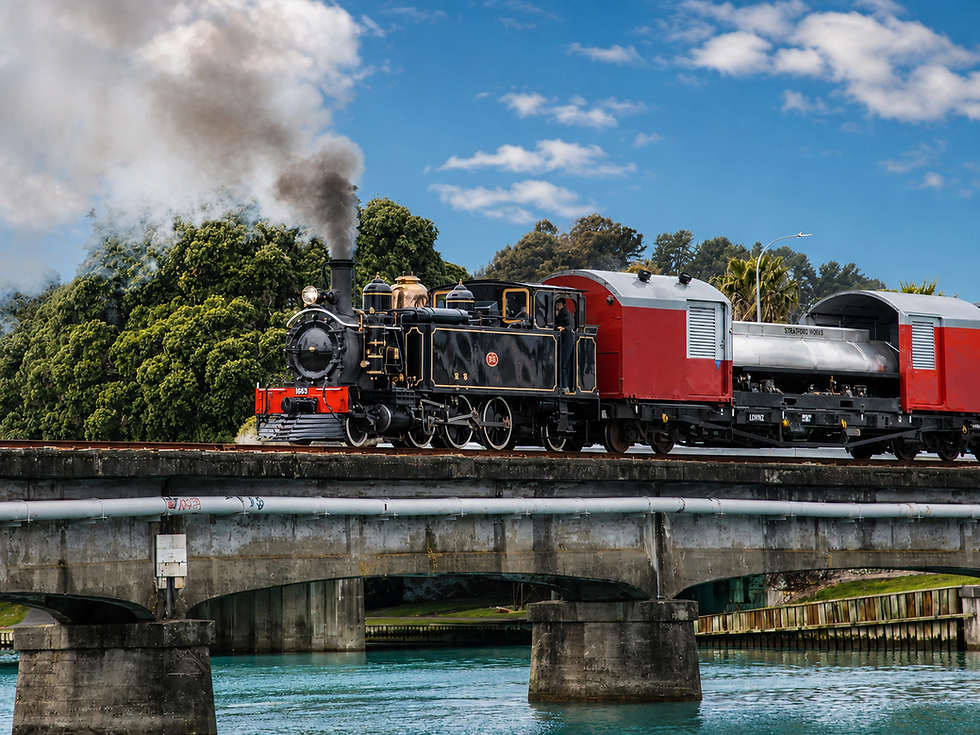
At the centre of the experience is Wa165.
Built in 1897 at New Zealand Railways’ Hillside Workshops in Dunedin, Wa165 is the only surviving locomotive of its class anywhere in the world.
For much of its working life, the locomotive operated on the challenging railway lines of the East Coast, hauling trains through steep grades and remote country long before modern highways connected the region.
Today, thanks to decades of restoration work by volunteers, the locomotive still runs under its own steam.
When the whistle sounds and the engine begins to move, it does not feel like a museum exhibit.
It feels alive.
The smell of coal smoke, the rhythmic sound of the wheels and the sight of steam drifting past the carriages create an atmosphere that modern transport simply cannot replicate.
The Train That Crosses An Airport Runway
If the locomotive itself is unusual, the route is even more remarkable.
The Gisborne City Vintage Railway operates on a local part of the historic Palmerston North-Gisborne railway line, a route that now survives largely because of the railway’s preservation efforts.
Shortly after departing Gisborne, passengers experience what is widely regarded as one of the most unusual railway crossings in the world.
The train crosses the main runway of Gisborne Airport.
Yes, an actual operational airport runway.
As aircraft movements are coordinated with railway operations, passengers often find themselves looking down the runway wondering whether a plane or a steam train has priority today.
There are very few places on Earth where a heritage steam train and commercial aircraft share the same piece of infrastructure.
Coastal Views, Farmland and Wide Open East Coast Scenery
Beyond the airport crossing, the journey settles into something slower and more reflective.
The train passes through rich agricultural country, crosses the long Waipaoa River bridge and offers views across Poverty Bay toward Young Nick’s Head.
Unlike many tourist railways that pass through forests or mountains, the Gisborne experience feels distinctly local.
The landscape is open.
The sky feels enormous.
There is a sense of space that suits the slower pace of steam travel perfectly.
Passengers are not rushing anywhere.
They are simply watching the region unfold outside the window.
The Muriwai Stop
The excursion includes a stop at Muriwai, where passengers can stretch their legs, take photographs and enjoy a picnic break before returning to Gisborne.
The stop itself feels refreshingly simple.
There are no theme parks, souvenir villages or artificial attractions waiting at the other end.
Instead, the experience focuses on the journey itself.
Families bring picnic baskets.
Visitors wander through the carriages taking photos.
Children inspect the locomotive while adults quietly appreciate the rarity of seeing a 19th-century steam engine still operating in regular service.
Keeping Gisborne’s Railway Story Alive
The train exists today because of an extraordinary effort by local volunteers.
When sections of the wider railway network were mothballed, many communities lost their rail services forever.
In Gisborne, volunteers chose a different path.
They restored locomotives, maintained track, repaired carriages and preserved a piece of regional history that might otherwise have disappeared.
The result is more than a tourist attraction.
It is one of the last living reminders of the era when rail connected remote communities throughout the East Coast.
Why Visitors Love It
Even people with little interest in trains often find themselves unexpectedly charmed by the experience.
Part of that is nostalgia.
Part of it is the scenery.
But much of it comes from the simple novelty of traveling slowly through a landscape that most people normally rush past by car.
And of course, there is the airport runway crossing.
No matter how many times people are told about it beforehand, it remains one of those experiences that sounds slightly ridiculous until you see it for yourself.
Which is exactly why it has become one of Gisborne’s most distinctive attractions.
For visitors looking for something genuinely different, the Gisborne steam train delivers an experience that feels increasingly rare in the modern world:
A journey where the journey itself is the attraction.